


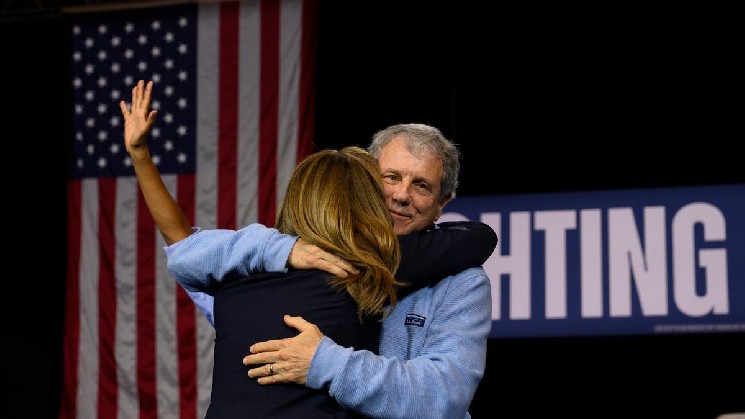
Many of those races were in red states where the president spent considerable time trying to raise a political defense in recent weeks. Texas went to Democrat James Talarico with 59% at last count. North Carolina went to Roy Cooper, also with nearly 59% of the vote. Kansas picked Democrat Adam Hamilton, while Iowa chose Democrat Josh Turek. And South Carolina favored Democrat Annie Andrews as the conservative state rejected Trump-backed Darline Graham, the sister of former Senator Lindsey Graham, a staunch Trump ally who died in July.
As this week’s general election approached, the crypto industry’s super PACs pumped a huge amount of money into supporting Republican candidates and opposing Democrats, even as polling and prediction markets suggested they were backing the losing party. The two biggest campaign investments were in Ohio, where the sector’s deep pockets devoted an unprecedented $63 million in the hopes of defeating Brown, and Nebraska, where Fairshake spent almost $11 million on Pete Ricketts, who was trailing late Tuesday night at the halfway mark of that state’s count.
Blue shift
The first two years of Trump’s second administration seems to have shifted much of the electoral map blue. What that means for the crypto industry is that the people controlling the legislative agenda will no longer be under strong directives from the president to create a crypto-friendly regulatory regime. They’ll also be free to conduct investigations that could pull in crypto interests.