



In short
- Grayscale research head Zach Pandl published a note on Wednesday arguing that Bitcoin may have already reached its cycle low, provided the Fed holds off further rate hikes.
- The firm rejects the traditional four-year cycle framework – which would predict a bottom in September or October with an average decline of 80% – and views Bitcoin as a macroeconomic asset.
- The Fed meets on July 29 and the Clarity Act faces an August 7 deadline in the Senate, with both events framed by Grayscale as key price catalysts for Bitcoin in the coming weeks.
Crypto asset manager Grayscale published a note on Wednesday with the main argument: Bitcoin’s bear market may already be over – if the Federal Reserve doesn’t raise interest rates.
The company’s head of research, Zach Pandl, has essentially laid out what he sees as two competing narratives that could potentially explain the current state of the Bitcoin market. The first, which he rejects, is the ‘four-year cycle’ view.
“Believers in the ‘four-year cycle’ theory view Bitcoin halving events as the main driver of price movements and expect the current bear market to play out like those in the past, he wrote. The Bitcoin halving is an event baked into Bitcoin’s code that halves mining rewards, essentially slowing the cryptocurrency’s inflation rate approximately every four years.
“The four-year cycle theory implies that Bitcoin’s price could fall further, with a bottom in September or October,” Pandl wrote.
With Bitcoin currently trading around $65,000, that would suggest a decline of around 15% from the current price.
However, Bitcoin is up more than 10% from an early July low of $57,717, and spot ETFs (exchange-traded funds backed by actual Bitcoin and accessed through standard brokerage accounts) have recorded nearly $1 billion in net inflows in seven straight sessions. On the other hand, it is still in a weakening monthly bearish trend that could easily continue for a few more months in the future.
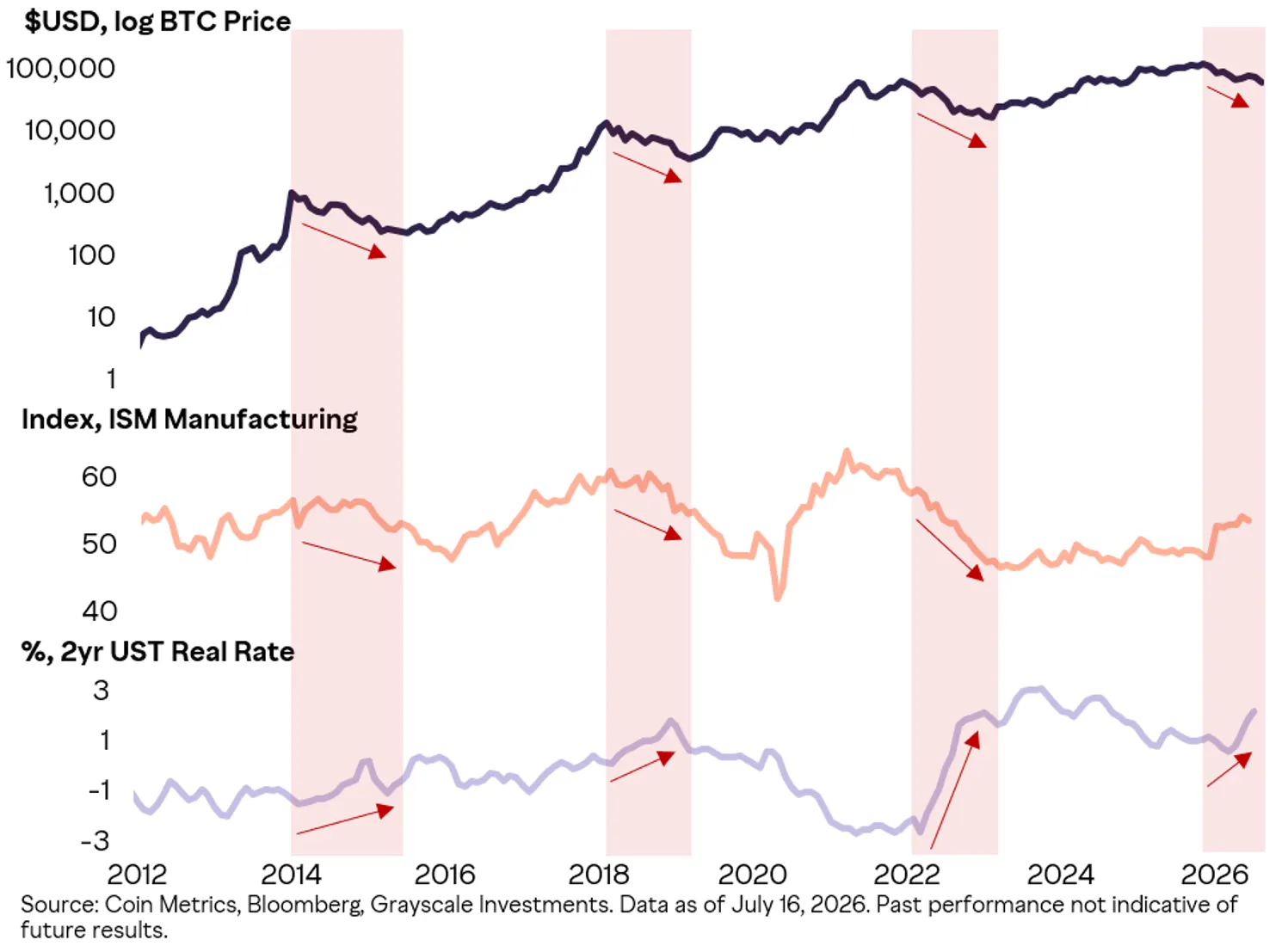
Under the four-year model, Pandl writes, “Bitcoin’s price has historically bottomed out about a year after the cyclical peak and roughly 2.5 years after the halving. Cumulative declines have averaged ~80%.” If so, as the charts show, Bitcoin could cost nearly $50,000 in the coming months before gaining value again.
Exchange-traded product issuer 21Shares, which predicted the four-year cycle would now be over, admitted in June that “price action still looks familiar.” CryptoQuant estimated the true bear market bottom in February to be $55,000, based on the price realized at the time.
Shades of gray don’t buy it. Pandl’s alternative: Bitcoin has evolved into something that trades more like gold or a price-sensitive technology stock than a speculative retail asset. The report notes that previous bear markets have coincided with slowing economic growth and rising real interest rates – the actual return on bonds after removing inflation.
“The current bear market has also led to a major shift in Fed policy expectations and rising real interest rates,” Pandl writes. “If macro factors are in control, Bitcoin’s price could obviously fall when these macro factors reverse.”
Bitcoin peaked at around $126,000 in October 2025 and is still down about 49%. The appointment of Kevin Warsh as Fed chairman — the hawkish choice that disrupted the humiliating trade that had fueled Bitcoin’s bull run — sparked a sharp reversal. Bitcoin briefly fell below $58,000 in early July before bouncing back.
The downside is that recovery can come just as quickly. “If the Fed refrains from raising rates and economic growth holds up well, Bitcoin’s price may already have bottomed out,” Pandl writes. Grayscale’s key takeaway: “The ‘four-year cycle’ view predicts lower lows for Bitcoin’s price, but a macro perspective suggests the bottom may already have been reached.”
There’s a second wildcard: the Clarity Act – a sweeping law on the structure of the crypto market that would divide regulatory oversight between the SEC, which oversees securities and investment products, and the CFTC, which oversees commodity derivatives. If the bill passes in the Senate and is signed into law, there is a lingering belief among market participants that Bitcoin, and the rest of crypto, could bounce back.
Bitcoin is trading lower today than yesterday, but is up about 4% over the past 30 days. The Fed will announce its next interest rate decision in six days.
Daily debriefing Newsletter
Start every day with today’s top news stories, plus original articles, a podcast, videos and more.