


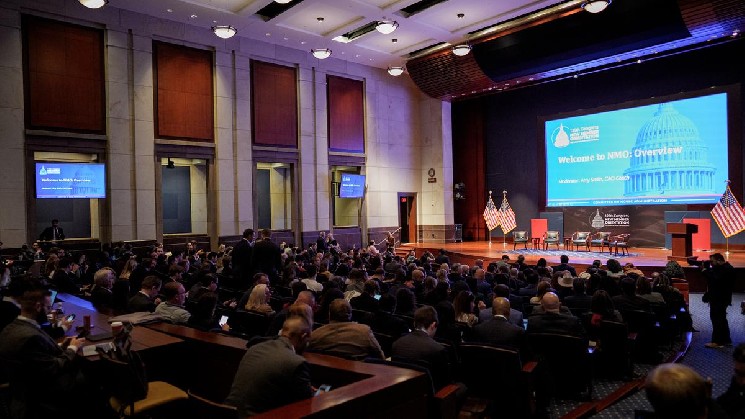
Whether that happens, though, is a policy outcome, one that depends on policymakers who understand what they are regulating. The gap between how fast the technology moves and how well Washington understands the technology is the difference between leading internationally and lagging behind international competitors, like China. Closing that education gap starts with a simple principle: the people writing the rules should have hands-on experience with the technologies that they are regulating.
It’s easier to be hands-on with some technologies over others. For example: Congressional leaders can experiment with some technologies from their own devices, like sending a stablecoin from a centralized crypto exchange, asking an AI chatbot a question about their district, or viewing results of a prediction market. Meanwhile, other tech can be more complex, and it is often helpful to get a demo or hear from the software developers or builders directly about how the technology functions and/or why it was developed (e.g., the difference between centralized finance and decentralized finance, open versus closed source AI, or how national security innovation works). It is unquestionably useful for a Member to interact directly with someone who uses the technology every day, so they can ask questions in real-time and share any worries they have. In every case of hands-on experience, a Member leaves with a better understanding and the ability to ask sharper, more thoughtful questions, grounded in their own experience rather than second-hand explanations.