



The case began with a civil forfeiture complaint filed on Oct. 14, 2025. DOJ said then that the Bitcoin was in US custody and alleged links to fraud and money laundering involving Prince Holding Group, a Cambodian conglomerate, and its chairman, Chen Zhi.
The court treated these claimants’ plausible allegations as establishing, at most, the position of general unsecured creditors: people seeking compensation without a qualifying interest in the particular assets being forfeited.
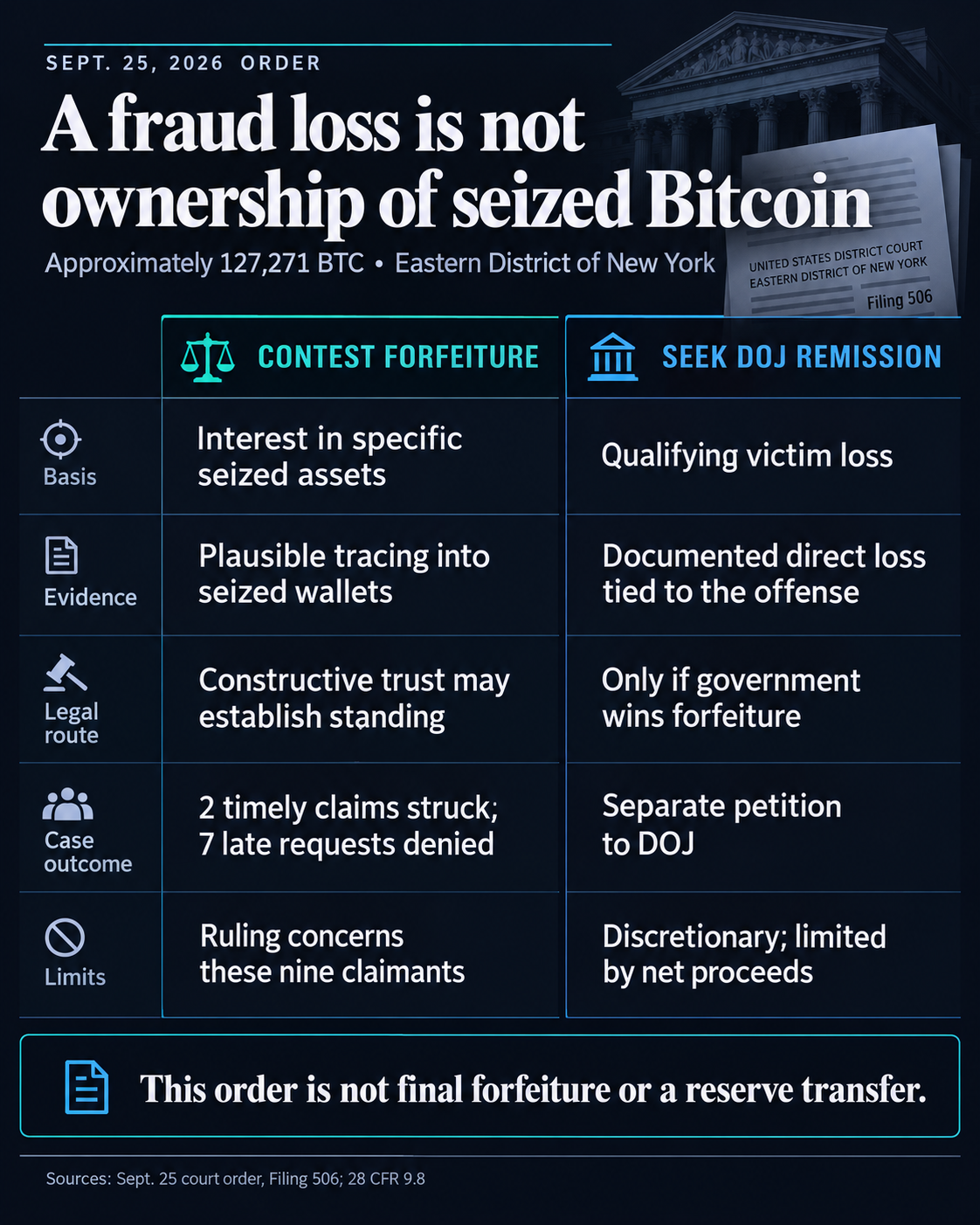
A loss tied to an alleged fraud did not establish ownership of coins in these wallets.
The order recognized that a constructive trust could give a claimant an equitable ownership interest and standing. That remedy can recognize an interest in property derived from a person’s assets. However, here none of the claimants plausibly alleged the necessary connection between their funds and the seized Bitcoin.
Lawrence D. Van Dyn Hoven, for example, relied on an investigator’s belief that his stolen cryptocurrency was part of the seizure. Kovner found that his filings offered no supporting facts explaining that belief.
What remission could provide
Kovner pointed to victim remission if the government succeeds in forfeiting the Bitcoin. That process allows eligible victims to petition DOJ for recovery from forfeited property even when they lack a present ownership interest in it.
Under 28 CFR 9.8, petitioners must document a specific financial loss directly caused by the offense underlying forfeiture or a related offense, and satisfy other eligibility conditions. Other conditions include no knowing participation in or benefit from the offense, and no willful blindness.
Petitioners must also show they have not been compensated for the loss and lack reasonably available alternative assets for recovery.
When the forfeited property cannot cover petitions in full, recognized victims may receive proportionate shares. Remission is capped at a victim’s share of the associated net forfeiture proceeds, so the size of the Bitcoin seizure is no promise of full repayment.
The Sept. 25 order resolves these nine claimants’ standing. Their potential recovery depends on government success in the forfeiture action and a separate discretionary decision on a documented-loss petition.