



In effect, the line offers two ways to use a single pool of bank capacity: borrowing cash or securing eligible obligations.
Flexibility for development, exposure at the parent
Hut 8’s June 30 balance sheet listed $233.6 million in cash, with restricted funds reported separately.
The line can help bridge interim development needs while Hut 8 decides when to arrange longer-term project financing, according to the company. That timing gives the parent a financing option while projects move through their earlier stages.
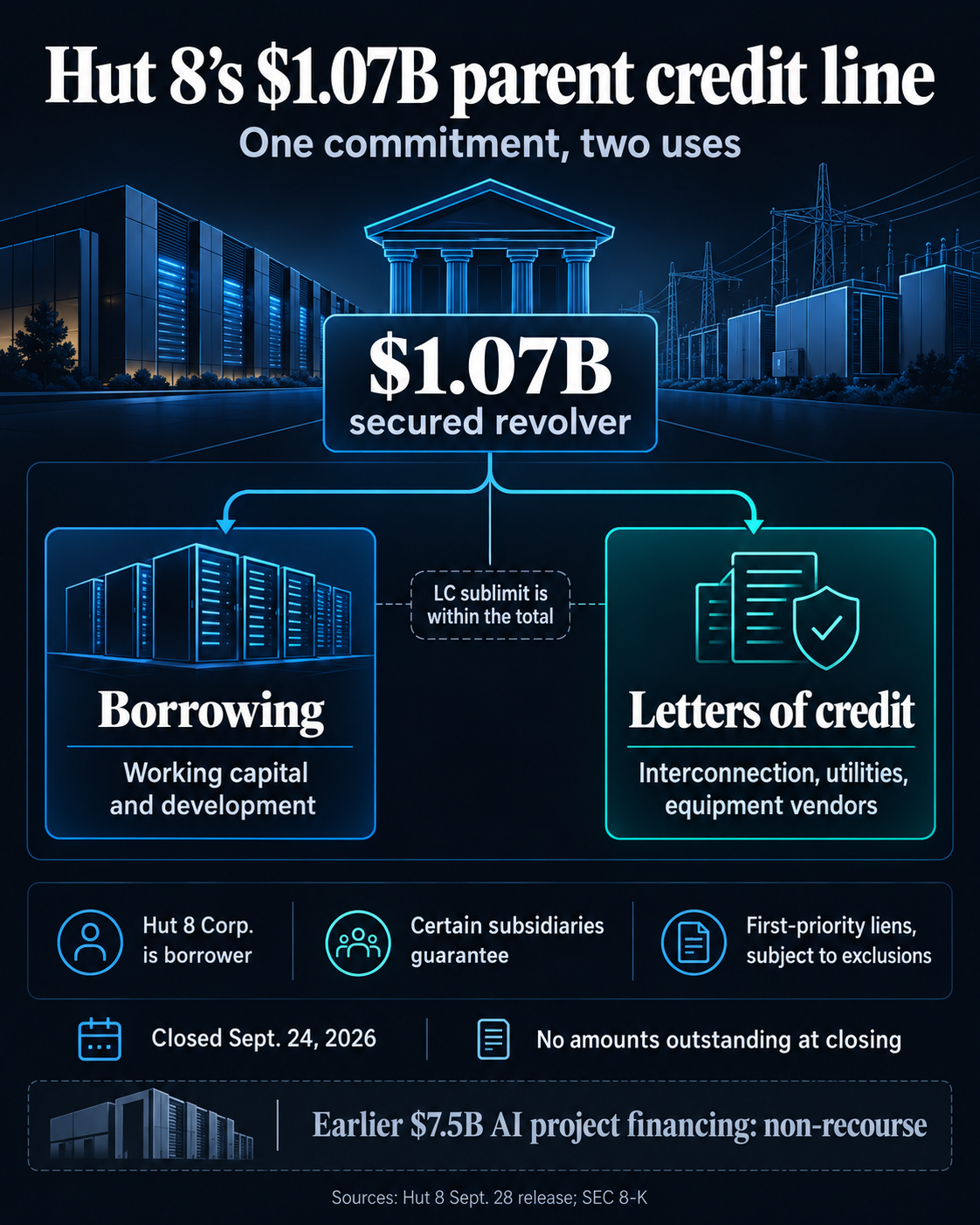
The new agreement names Hut 8 Corp. as borrower. Certain restricted subsidiaries guarantee its obligations, and first-priority liens cover substantially all assets of the borrower and guarantors, subject to exclusions.
Hut 8 described $7.5 billion of earlier financing for its River Bend and Beacon Point AI campuses as non-recourse project financing. Use of the new line could create secured obligations at the parent and guarantor level alongside those project structures.
If Hut 8 chooses Term SOFR loans, the initial margin is 1.75 percentage points above the benchmark. That margin can range from 1.50 to 2.00 points as the company’s debt-to-market-capitalization ratio changes.
The agreement also restricts certain additional debt and liens, subject to qualifications, and a minimum-liquidity covenant beginning with the quarter ending March 31, 2027.
Its threshold is 40% of commitments before a defined stabilization date and 25% afterward, measured using the agreement’s definition of liquidity and subject to equity cure rights. How much Hut 8 eventually borrows or issues in letters of credit will determine the scale of its parent-level obligations.