


In short
- Zcash will roll out quantum recoverable wallets within a month, aiming to improve security against future quantum computing threats.
- The privacy coin plans to reach full post-quantum status within 12 to 18 months, positioning itself ahead of major cryptocurrencies in quantum resistance.
- ZEC has soared in the past month following Multicoin Capital’s announcement of a “significant” position in the privacy coin.
Privacy coin Zcash is the latest cryptocurrency gearing up to tackle the growing threat of quantum attacks.
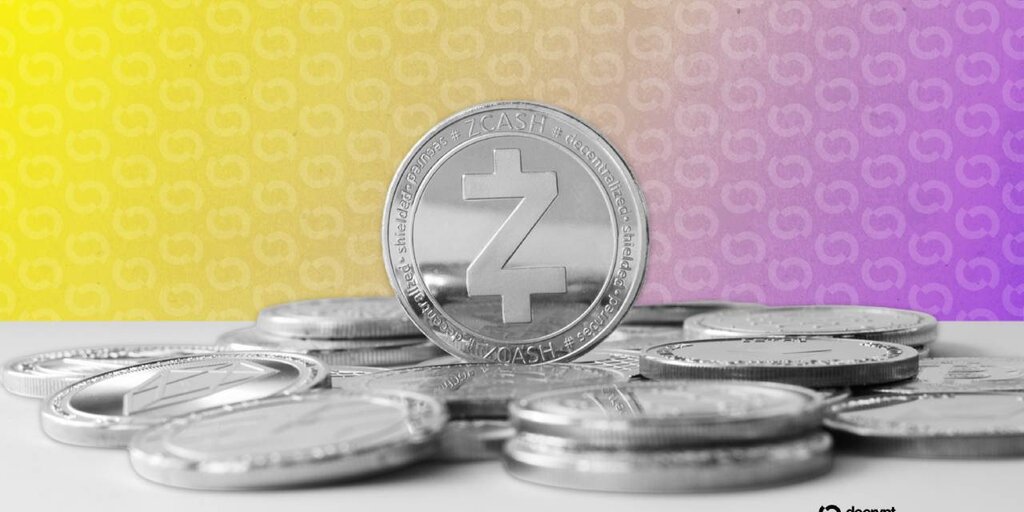
Speaking on a Thursday address on Consensus Miami’s Privacy track, Josh Swihart, founder and CEO of Zcash Open Development Lab, said quantum recoverable wallets for the privacy coin will be rolled out within a month, with Zcash targeting full post-quantum state within 12 to 18 months.
Within the same period, the network is also aiming to achieve throughput comparable to that of Mastercard and Visa, with Swihart arguing that Bitcoin is “just fundamentally broken” as a peer-to-peer private payment system.
Zcash has performed well over the past month, rising more than 73% over the past 30 days, according to CoinGecko data. Much of that momentum is attributed to institutional interest following Multicoin Capital’s unveiling of a “significant” investment in the privacy coin, with company co-founder Tushar Jain calling it a “return to the cypherpunk ideals on which crypto was based.”
During Consensus, Swihart highlighted Zcash’s recent technical achievements, including last year’s integration from Near Intents with Electric Coin Company’s mobile wallet, enabling cross-chain swaps of assets such as Bitcoin, Solana and USDC directly into shielded ZEC.
Since launch, approximately $600-700 million has flowed through the cross-chain route, mainly to and from USD and USDC, according to Swihart. The improved accessibility appears to be driving adoption of Zcash’s privacy features, with the network’s shielded pool now containing 30% of circulating ZEC – an all-time high.
Crypto and Q-Day
Zcash’s quantum resistance comes amid growing concerns about the threat posed by “Q-Day,” the moment when quantum computers become powerful enough to break the cryptography underlying Bitcoin and other cryptocurrencies.
This week, a report from quantum security firm Project Eleven warned that Q-Day could arrive as soon as 2030, following last month’s revelation that a researcher had successfully broken a 15-bit elliptic curve key using public quantum hardware.
Zcash developers have already been preparing for the quantum threat, with Zcash employee and engineer Sean Bowe telling Decrypt that developers are prepared to “make major protocol changes for a year or two if necessary.” Other major blockchains, including Solana and Aptos, have also taken steps to harden their networks against future quantum attacks, while Coinbase recently flagged proof-of-stake chains such as Ethereum and Solana as facing specific quantum risks.
Daily debriefing Newsletter
Start every day with today’s top news stories, plus original articles, a podcast, videos and more.